The music
From ballads to reels: how Scottish folk music got to the table
What the musicians mean by a ballad, where the tunes were gathered and why a folk evening can be as much talk as song.
Reserve your evening ↗Quick answer
Scottish folk music is a layered tradition: story-songs passed on by mouth, dance tunes played on fiddle and later accordion, and a mid-20th-century revival that sent collectors out with recorders. Wikipedia says ballads stayed oral until 18th-century collectors printed them, that Francis James Child's 1882 to 1892 volumes shaped later repertoires, and that the School of Scottish Studies opened in Edinburgh in 1951. An evening that runs from ballads to lively songs is walking you through those layers, which is why the booking page stresses the stories behind the songs.
Four layers of the tradition
| What it is | In the record | |
|---|---|---|
| Ballads | Story-songs handed down by ear | Printed by collectors from the 18th century, says Wikipedia |
| Dance tunes | Reels, strathspeys and other fiddle music | Niel Gow and his son composed hundreds of tunes |
| Accordion | A newer voice in Highland dance bands | Central to Highland dances from the 1920s, says Wikipedia |
| The revival | Collectors, festivals and folk clubs | The School of Scottish Studies dates from 1951 |
What a ballad is
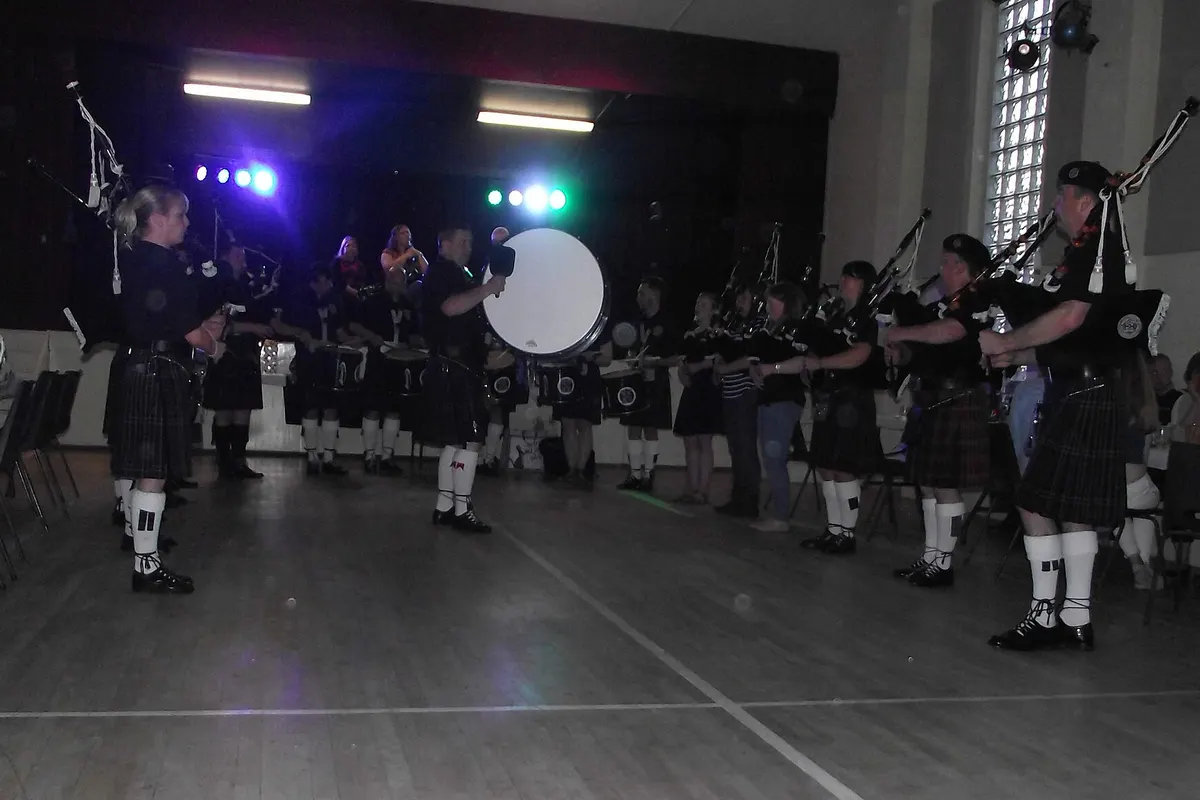
In Scottish usage a ballad is a story told in verse and sung to a simple tune, often about love, betrayal, battle or the supernatural. Wikipedia says these songs stayed in oral tradition until collectors in the 18th century, such as Bishop Thomas Percy, began to publish them, and it points to the fairies of Tam Lin as evidence of older, pre-Christian themes. The form suits a table with two musicians, because the words carry the interest and a guitar or accordion can support them quietly. When a performer pauses to explain who the characters were, the song lands harder, and that is the pattern the booking page describes.
Child, Greig and the first collectors
The late 19th century brought a more scholarly first revival. Wikipedia credits Francis James Child's eight volumes of English and Scottish popular ballads, published from 1882 to 1892, with shaping what later singers chose to perform, and says Gavin Greig gathered more than a thousand songs, mostly in Aberdeenshire. Neither man was a performer in the modern sense, but their books supplied the texts that folk singers still draw on. If a musician at your table introduces a ballad by name, there is a fair chance its words were recorded by a collector like these.
Reels, strathspeys and the fiddle
Wikipedia lists reels and strathspeys among Scotland's dance-tune types and names Niel Gow and his son Nathaniel as composers of hundreds of fiddle tunes and variations. James Scott Skinner earned the nickname Strathspey King. The fiddle's deep roots show in a note from 1703, when the traveller Martin Martin counted eighteen fiddle players on the island of Lewis alone. A ceilidh in the modern sense is built on this music, since the Ceilidh article on Wikipedia describes sets and couple dances to Scottish tunes. A seated evening borrows the repertoire without the dancing.
The accordion arrives
The accordion has a shorter history in Scotland than the fiddle. Wikipedia says it became central to Highland balls and dances from the 1920s, and today it is a staple of bands. In a duo with a guitar it plays two roles at once, carrying the melody and holding a rhythm, which lets two people sound like a small band. The booking page's own photograph shows exactly this pairing, a guitarist and an accordion player playing to diners.
The word ceilidh
Wikipedia traces the word to an Old Irish term for a companion and says it came to mean a visit in Gaelic. Originally, a ceilidh was any social gathering, often a literary evening of storytelling, poetry, ballads, songs and proverbs, hosted by the man of the house. Dancing later took over the name. That older sense is closer to what a folk dinner offers: an evening of songs and tales with people gathered round a table, even if no one gets up to dance.
The post-war revival
After the Second World War, Wikipedia says traditional music stayed stronger in Scotland than in England. The School of Scottish Studies opened at the University of Edinburgh in 1951. Hamish Henderson, described as a catalyst of the revival, guided the American folklorist Alan Lomax around Scotland in the 1950s and helped stage the 1951 People's Festival Ceilidh, billed as a night of Scottish song. Rounder Records released a recording of that night in 2005, with Henderson's help. Tobar an Dualchais now puts recordings from Scottish collections online.
What to listen for
At the table, notice whether a song tells a story, marks a place or keeps time for dancing. Notice how a performer introduces it, since the introduction is often where the history sits. If a melody has a lilt that makes your foot tap, it probably belongs to the dance tradition; if the words matter more than the tune, you are likely in ballad territory. Neither is better, and a good evening moves between them.
Frequently asked questions
Is a ballad the same as a folk song?
A ballad is one kind of folk song: a story told in verse. Folk music also includes dance tunes and work songs.
Do I need to know Scottish music to enjoy the evening?
No. The booking page says the musicians explain the stories behind the songs.
Where can I hear original recordings?
Tobar an Dualchais hosts recordings from Scottish archives online, searchable by song, story and place.
Sources